Strategy
Part of A complete guide to direct mail marketing for 2027 campaigns
Direct mail marketing examples worth adapting for a real campaign
Direct mail marketing examples from IKEA, Warby Parker and others show how format, offer, copywriting and timing work together on a real campaign.
What to take away
- Copy this onethe renewal notice, or a coupon tied to your own list. These direct mail marketing examples are worth adapting to a real campaign because you can count the result.
- IKEA's catalog ran from 1951 to 2020 because it doubled as a store visit planner, not a brochure.
- Warby Parker mails home try-on kits so the frames sell themselves before anyone pays.
- Trader Joe's Fearless Flyer shows a mailed product sheet can carry the whole message.
- A renewal notice works when it states the date, the price and the one action to take.
- Copy the mechanism and the control, never the artwork or the claims.
- Every mailed piece needs a defined completed outcome before you print.
Direct mail marketing examples are useful only when you can name the audience, the format, the response route and the finished outcome. Every campaign below is a real, publicly documented mailing. Each one earns its place because its structure transfers to a smaller budget.
What the well-known campaigns actually did
IKEA catalog. IKEA printed its catalog from 1951 until it announced the final edition in 2020, when the company said it would retire print in favor of digital. At its peak, around 2016, IKEA distributed roughly 200 million copies a year. The format was a bound book with page numbers, room layouts and prices. That print run is history now.

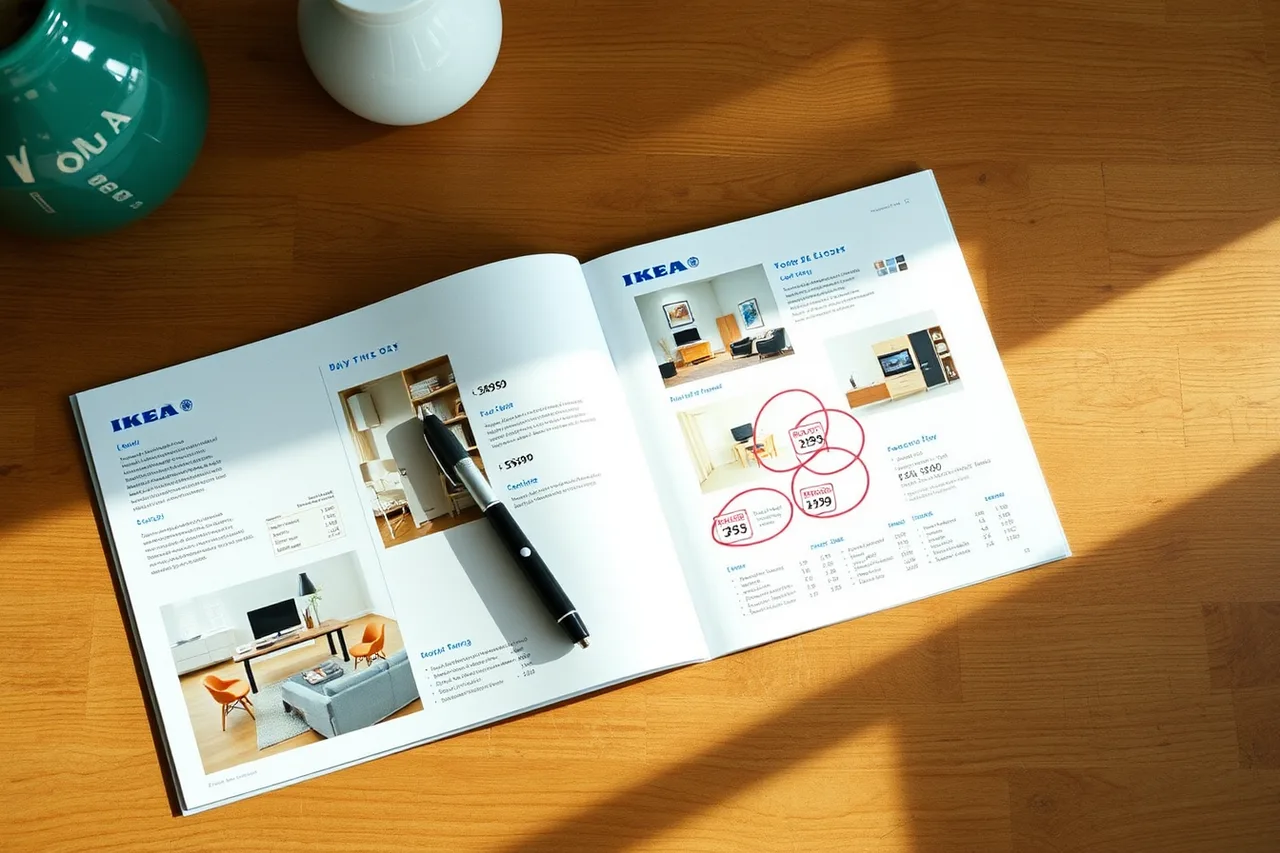
Why it worked. The book was a planning tool: page numbers, room layouts, prices and store hours. A reader could circle three items and walk in with a route.
Warby Parker home try-on. The eyewear company mails 5 frames, the customer keeps them 5 days, and returns the box with a prepaid label. Shipping both ways is free, and nothing is charged until an order is placed. The mailing carries no purchase risk for the recipient.
A kit shipped both ways at US retail rates typically costs $10 to $20, so the free trial carries a real cost per piece.
Bonobos Guideshop invitations. Bonobos built its retail around appointment-only fitting rooms instead of stocked shelves. The shops hold samples, and orders ship to the customer's home.
A mailed invitation to a named location, with a time window, turns a browsing list into scheduled visits. Walmart bought Bonobos in 2017 for $310 million, then sold it to Express and WHP Global in 2023 for $75 million. That 2023 sale is historical context.
A single-card mailing of this kind typically costs $0.60 to $1.50 per piece, with print and postage included.
Dollar Shave Club trial mailers. The company's early growth came from a 2012 launch video, but retention work ran on mailed trial offers and refill timing. Subscription plans started at $1 a month plus shipping, and Unilever bought the company for $1 billion in 2016.
Those price points are historical context. Each mailed offer is a single piece, and print, list work and current postage rates set its cost per piece. The lesson is the refill calendar, not the razor.
Chewy pet portraits. Chewy is known for mailing hand-painted portraits of customers' pets, usually without warning. Recipients photograph them and post, which extends the mailing's reach online. The mechanism is a retention gift tied to a repeat order, not a discount.
The gift goes to a small slice of a customer file reported in the tens of millions of households. It costs far more per piece than a coupon, so the piece is targeted rather than mass mailed.
Trader Joe's Fearless Flyer. The Fearless Flyer is a printed mailer that reads like a column, describing products in simple words next to their prices. Small operators can copy the tone: one product, one short paragraph, one price.
It is a newsprint sheet, not a bound catalog, and it typically costs $0.10 to $0.30 to print at volume before postage.
Bed Bath & Beyond 20% coupon. The blue 20% off one item coupon reached households for years, and shoppers hoarded it for large purchases. Stores accepted expired coupons for long stretches, which gave people a reason to walk in. The chain filed for bankruptcy in 2023, so that coupon run is history. Copy the standing offer, not the size of the discount.
Costco sample and coupon mailings. Costco and other warehouse clubs have mailed coupon books and sample offers tied to membership. Fees went to $65 for Gold Star and $130 for Executive in September 2024, so the coupon book has to earn back a known number.
Those are the 2024 figures; check the current fee before you model the break-even. A coupon book is a bulk mailing, so its postage runs below first-class rates.
REI member dividend. The outdoor co-op mails an annual dividend notice showing the 10% members earned back on eligible purchases. The notice states the amount, the dates and how to spend it. It is a renewal notice with a member number attached.
The notice goes to more than 20 million members, as the co-op reports.
U.S. Census Bureau mail sequence. The 2020 count used a series of mailings: an invitation letter, reminder postcards, then a paper questionnaire for households that had not responded. Each piece arrived in a plain envelope with one instruction.
The 2020 count closed with a self-response rate of about 67 percent, and the next count runs in 2030. Political mail borrows the same shape.
A worked example: the renewal notice
Take a dental practice with 900 patients due for a cleaning in the next quarter. The mailing is a single card, first class, carrying the patient's name, the last visit date, the practice phone number and a booking link. The table sets out each decision.
| Decision | Choice | Why |
|---|---|---|
| Format | Single card, first class | Forwarded if the patient moved |
| List | Patients 11 to 14 months since last visit | Past the recall window |
| Offer | No discount | The service is already due |
| Response route | Phone and online booking | Half of patients prefer one or the other |
| Measure | Completed cleanings in 90 days | Not calls, not clicks |
| Holdout | A share of the list left unmailed | Shows the card caused the bookings |
All figures are in US dollars. Take a sample cost of $1.00 per card all in, covering print, postage and list work. 900 cards then cost $900.
Direct mail response typically lands between 1% and 5%. If 45 patients complete a cleaning, the top of that response range, cost per completed visit is $20. Substitute your own postage, print and staff time.
Turning an example into a test
The NIST Privacy Framework starting guide outlines a voluntary process for identifying and managing privacy risk. It is not legal clearance.
The W3C information and relationships explanation says visual structure and relationships should also be programmatically available.
- Pick one campaign above that solves a problem you can observe
- Write original copy and license your own images
- State the terms, the eligibility and the deadline in plain words
- Prototype the piece and the landing page together
- Brief staff and stock for a plausible response
- Compare completed outcomes against a holdout group
Document what changed when you adapted it. Audience, geography, season, price and capacity all move the result. Drop any concept that depends on fake urgency, hidden terms or data your team cannot govern. A written offline marketing strategy checklist keeps each test tied to its audience and evidence.
Common questions
Which example suits a small business?
A renewal notice or a Costco-style coupon tied to your own list. Both use data you already hold, and both are measured by completed appointments or completed orders rather than clicks.
Can I mail a physical sample?
Only after checking safety, packaging and postal rules for the item. For children's products, confirm requirements with the U.S. Consumer Product Safety Commission and a certified testing lab before mailing.
How many ideas should run at once?
One. Run a single mechanism with a holdout so you can tell delivery problems from offer problems. Add a second only after the first produces a completed outcome you can count.
Do I need legal review before mailing?
USPS mailing standards cover format, addressing and mailpiece design, so check the Domestic Mail Manual before you print. The Telephone Consumer Protection Act covers calls and texts to numbers on your list. State privacy laws, such as the California Consumer Privacy Act, govern how you collected the list and how people opt out.
Ask a qualified US lawyer to confirm the campaign. In Canada, the second market this site covers, French-language requirements for Quebec distribution sit with the OQLF, and tax questions go to the Canada Revenue Agency or Revenu Quebec.
Where does the refill calendar fit?
Dollar Shave Club pairs the mailed trial with a refill date, and Chewy pairs a gift with a repeat order. Both put the next purchase on a known date instead of waiting for the customer to remember.
An offline marketing strategy built on one borrowed mechanism beats a bundle of half-tested ideas.